Bill C-75 · 42th Parliament · Justin Trudeau
An Act to amend the Criminal Code, the Youth Criminal Justice Act and other Acts and to make consequential amendments to other Acts
Government bill. Became law.
- IntroducedMarch 29, 2018
- Debated in principleJune 11, 2018
- Studied by a committeeDone
- Passed its first chamberDec. 3, 2018
- Passed the second chamberJune 13, 2019
- Became lawJune 20, 2019
Leading supporters
Ranked by the part each played: who is responsible for the bill, who carried it, and who spoke for it most.
- Justin TrudeauPrime Minister
- Murray SinclairSenate · Sponsor in the Senate
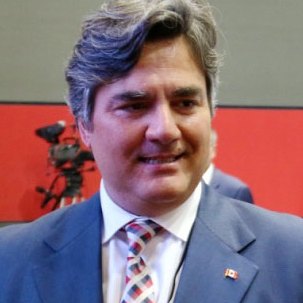
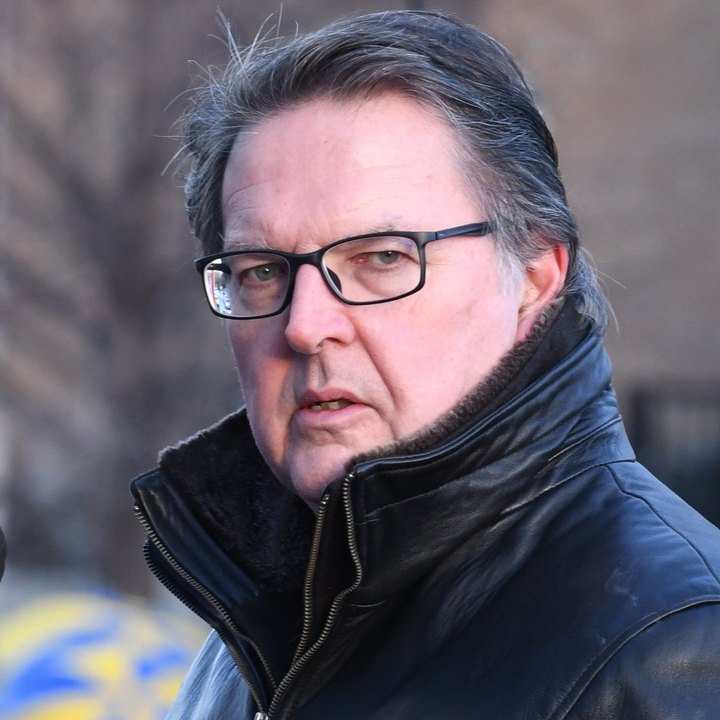
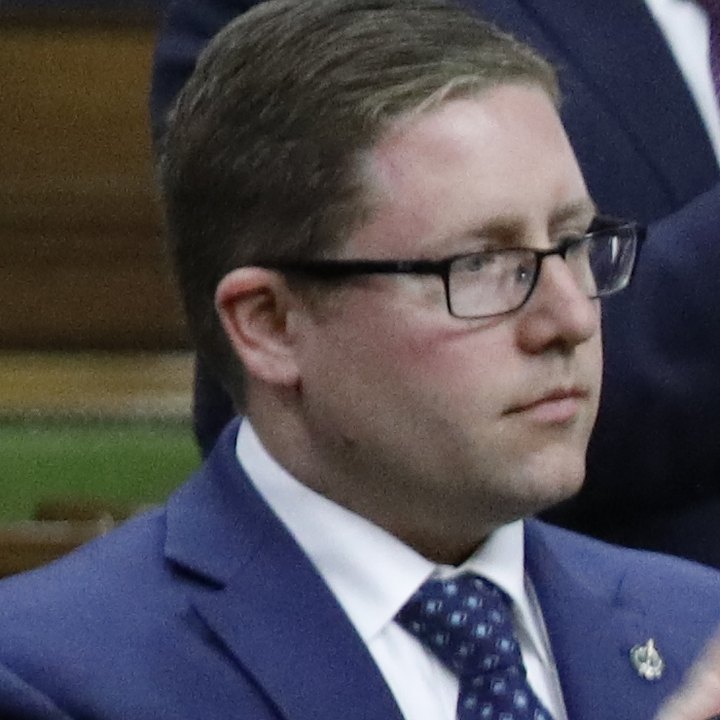
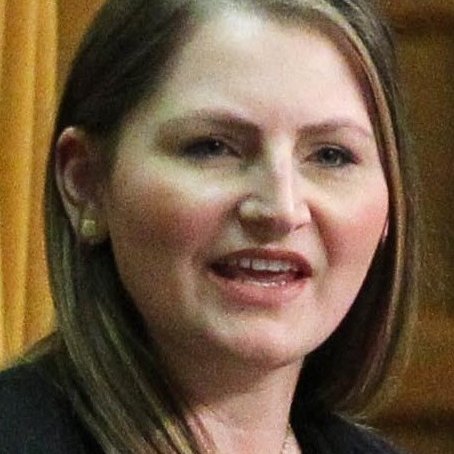
- Celina Caesar-ChavannesLiberalShe praises the bill for addressing court delays and strengthening the system for victims and equity.
- Colin FraserLiberalHe explicitly states support and highlights positive changes for clarity and youth justice efficiency.
- Anthony HousefatherLiberalHe endorses the bill's goals for a faster, fairer system and defends its provisions.

- Chris BittleLiberalDefends the bill's hybrid offence and sentencing reforms as appropriate.

- Kamal KheraLiberalproud to speak on the bill and states it fulfills the promise of comprehensive criminal justice reform
- Jody Wilson-RaybouldLiberalShe introduces the bill proudly as a key milestone for modernizing the justice system.
Who carries this bill
Arrows run from the person responsible to those who answer to them on this bill. The critic leads the Senate’s scrutiny and answers to no one on it.

What it set out to do
The pre-release version of this Legislative Summary is now available. Parliamentarians and their staff can obtain a copy by submitting a request or contacting the Library of Parliament. Members of the public can obtain a copy by contacting the Information Service at the Library of Parliament at [email protected]. On 29 March 2018, the Minister of Justice introduced Bill C-75, An Act to Amend the Criminal Code, the Youth Criminal Justice Act and other Acts and to make consequential amendments to other Acts, in the House of Commons and it was given first reading. Bill C-75 amends the Criminal Code to, among other things, (a) modernize and clarify interim release provisions to simplify the forms of release that may be imposed on an accused, incorporate a principle of restraint and require that particular attention be given to the circumstances of Aboriginal accused and accused from vulnerable populations when making interim release decisions, and provide more onerous interim release requirements for offences involving violence against an intimate partner; (b) provide for a judicial referral hearing to deal with administration of justice offences involving a failure to comply with condit…
Summary by the Library of Parliament.
Where members stand
3rd reading and adoption of Bill C-75 · 2018-12-03 · Passed
- Voted for: 167
- Voted against: 106
- Did not vote: 61





























What the Senate tried to change
- otherDenise BattersWould amend Bill C-75 at third reading to address jury selection process including peremptory challenges.Voted down · June 13, 2019 · Senate record
- adds provisionsSenator BoisvenuWould amend clause 225 on page 79 to reverse onus of proof for accused of intimate partner violence who has previously received a conditional discharge.Voted down · June 13, 2019 · Senate record
How it changed on the way
69% of the text as introduced was changed or removed by the time it became law (106,333 words introduced, 64,772 passed). A committee amended it.
substantial changeintent mostly kept
The bill kept its core aims on bail reform, judicial referrals and preliminary inquiries but saw 69 percent of the introduced text changed through added offences and revised surcharge rules. Preliminary inquiry access was narrowed while the victim surcharge regime was re-enacted with wider waiver grounds and many new hybrid offence provisions were inserted.
- Narrowed preliminary inquiry availability by raising the imprisonment threshold.
Before: “restrict the availability of a preliminary inquiry to offences punishable by imprisonment for life”
After: “restrict the availability of a preliminary inquiry to offences punishable by imprisonment for a term of 14 years or more”
- Replaced detailed victim surcharge exemptions with broader judicial waiver discretion.
Before: “allow the court to exempt an offender from the requirement to pay a victim surcharge if the offender satisfies the court that the payment would cause the offender undue hardship, provide the court with guidance as to what constitutes undue hardship”
After: “re-enact the victim surcharge regime and provide the court with the discretion to waive a victim surcharge if the court is satisfied that the victim surcharge would cause the offender undue hardship or would be disproportionate to the gravity of the offence or the degree of responsibility of the offender”
- Added new stand-alone offences for sabotage and related conduct.
After: “Sabotage 52 (1) Every person is guilty of an indictable offence and liable to imprisonment for a term of not more than 10 years or is guilty of an offence punishable on summary conviction who does a prohibited act for a purpose prejudicial to”
- Expanded Attorney General definition and added multiple terrorism-related hybrid offences.
Before: “Attorney General (a) subject to paragraphs (b.1) to (g), with respect to proceedings to which this Act applies, means the Attorney General or Solicitor General of the province in which those proceedings are taken and includes his or her lawful deputy,”
After: “Attorney General (a) with respect to proceedings to which this Act applies, means the Attorney General or Solicitor General of the province in which those proceedings are taken and includes his or her lawful deputy or, if those proceedings are referred to in subsection 2.3(1), the Attorney General of Canada or the Attorney General or Solicitor General of the province in which those proceedings are taken and includes the lawful deputy of any of them,”
How precisely it is written
mixedChallenging the law: ModerateDisputing a charge: Moderate
The bill relies heavily on fixed numbers, listed sections and defined terms to set clear thresholds for offences, penalties and procedures. It also inserts several subjective standards that require case-by-case judgment by courts or officials.
Open to argument
“if the court is satisfied that the victim surcharge would cause the offender undue hardship or would be disproportionate to the gravity of the offence or the degree of responsibility of the offender”
Uses open-ended phrases that invite argument over what counts as undue or disproportionate.“without reasonable excuse”
Subjective standard that depends on what a court later accepts as reasonable.“for a purpose prejudicial to”
Requires proof of an imprecise mental state tied to an undefined harm.
Clear-cut
“restrict the availability of a preliminary inquiry to offences punishable by imprisonment for a term of 14 years or more”
Uses a single, objective numerical cutoff.“intimate partner with respect to a person, includes their current or former spouse, common-law partner and dating partner”
Supplies an explicit, closed list of relationships.“extend the limitation period for summary conviction offences to 12 months”
States a fixed time period with no qualifiers.
Discretion. Courts receive limited discretion to waive surcharges or accept excuses, while the Attorney General of Canada gains explicit concurrent jurisdiction over listed terrorism and extraterritorial offences.
Challenging the law itself. Subjective phrases such as undue hardship could be attacked under Charter s. 7 for vagueness or overbreadth.
Disputing a charge under it. Many offences turn on clear numerical maxima or listed sections, but the subjective standards allow factual disputes over excuses or disproportionality.
Read by a language model from the royal assent text; every quoted phrase appears in the bill. A reading of the drafting, not legal advice.
Did it work?
no evaluation found
Who lobbied on it
No lobbying registration naming this bill is loaded.
Stages and dates from LEGISinfo.