Bill C-18 · 45th Parliament · Mark Carney
Canada-Indonesia Comprehensive Economic Partnership Agreement Implementation Act
An Act to implement the Comprehensive Economic Partnership Agreement between Canada and Indonesia
Government bill. Became law.
- IntroducedDec. 11, 2025
- Debated in principleFeb. 2, 2026
- Studied by a committeeDone
- Passed its first chamberMarch 11, 2026
- Passed the second chamberMay 5, 2026
- Became lawMay 6, 2026
Leading supporters
Ranked by the part each played: who is responsible for the bill, who carried it, and who spoke for it most.
- Mark CarneyPrime Minister

- Clément GignacSenate · Sponsor in the Senate
- Pierre MoreauSenate · Government Representative in the Senate

- Adam ChambersConservativenotes consensus to send bill to committee and affirms Conservative support for free trade.

- Kevin Lamoureux8 interventions in debatedefends the trade agreement and related deals for agriculture and diversification

- Maninder Sidhu5 interventions in debateThe member states he speaks in support of the bill to implement the trade agreement.

- Peter Fonseca5 interventions in debateexplicitly backs the bill and agreement for trade benefits and standards
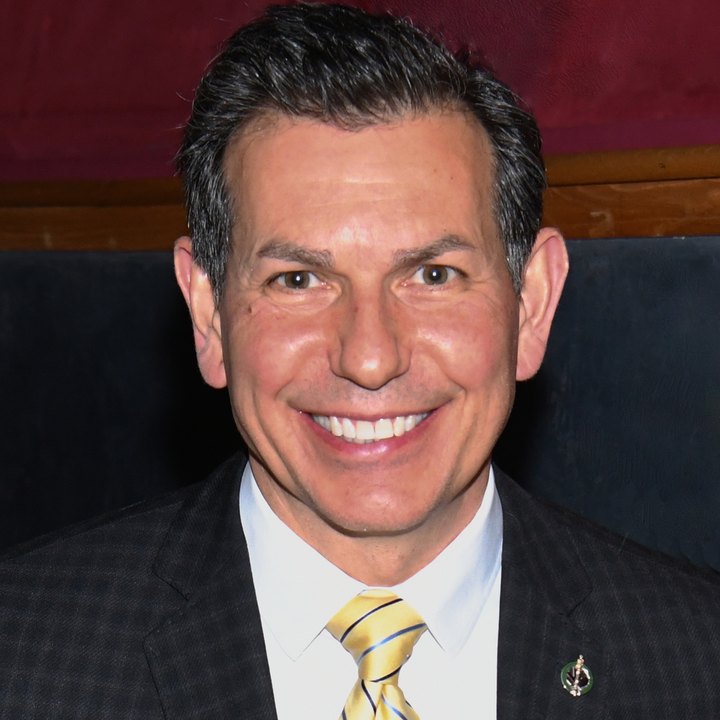
- Michael ChongConservativenotes Conservatives support government on some matters and discusses enforcement without rejecting bill.

Who carries this bill
Arrows run from the person responsible to those who answer to them on this bill. The critic leads the Senate’s scrutiny and answers to no one on it.

What it set out to do
On 11 December 2025, the Minister of International Trade introduced Bill C-18, An Act to implement the Comprehensive Economic Partnership Agreement between Canada and Indonesia (Canada-Indonesia Comprehensive Economic Partnership Agreement Implementation Act) in the House of Commons and it was given first reading. Bill C-18 implements the Comprehensive Economic Partnership Agreement between Canada and Indonesia, done at Ottawa on September 24, 2025. Among other things, it (a) approves the Agreement; (b) provides that no recourse may be taken on the basis of certain provisions of the enactment or any order made under those provisions, or on the basis of the provisions of the Agreement, without the consent of the Attorney General of Canada; (c) provides for payment by Canada of its share of the expenditures associated with the operation of the institutional and administrative aspects of the Agreement; and (d) gives the Governor in Council the power to make orders in accordance with the Agreement. It also makes related amendments to certain Acts to bring them into conformity with Canada’s obligations under the Agreement.
Summary by the Library of Parliament.
Where members stand
2nd reading of Bill C-18 · 2026-02-02 · Passed
- Voted for: 332
- Voted against: 1
- Paired: 4
- Did not vote: 5
For it 323
Voted for it, or spoke in support

































and 283 more
Challenging it 11
Support only with changes, or serious objections raised in debate











Against it 0
Voted against it and argued against it
How it changed on the way
7% of the text as introduced was changed or removed by the time it became law (11,549 words introduced, 11,832 passed). A committee amended it.
substantial changeintent broadened
The bill gained new mandatory compliance and review provisions that were absent at introduction. It also dropped the explicit reference to Governor in Council order-making power while adding ministerial duties and a three-year parliamentary review cycle.
- Added requirements that the Minister ensure Canadian companies follow Article 22.15 principles, create a complaints process, and table annual reports.
After: “(e) requires the Minister for International Trade to ensure that Canadian companies comply with the principles and guidelines referred to in Article 22.15 of the Agreement;”
- Added a new section requiring comprehensive review of the Act and Agreement by a House committee every three years with a report to the House.
After: “(f) requires a comprehensive review of the operation and effect of the Act and of the Agreement every three years.”
- Removed the clause granting the Governor in Council power to make orders under the Agreement.
Before: “and (d) gives the Governor in Council the power to make orders in accordance with the Agreement.”
How precisely it is written
mixedChallenging the law: HardDisputing a charge: Moderate
The bill mixes exact definitions, fixed dates, and mechanical rounding rules with repeated subjective tests such as 'appropriate share' and 'considers necessary'. This leaves several key obligations open to argument rather than settled by the text alone.
Open to argument
“pay its appropriate share of the aggregate of any expenditures”
The word 'appropriate' supplies no objective test or formula for determining the share.“take any other measure that the Governor in Council considers necessary”
The phrase turns on the Governor in Council's opinion rather than an enumerated list of measures.“if the Tribunal is satisfied that it contains or is accompanied by the information required”
Satisfaction is a subjective standard that invites prolonged argument over sufficiency.
Clear-cut
“If a reduction under subsection (3) or (4) results in a specific rate of customs duty that includes a fraction of one tenth of a cent, the rate shall be rounded down to the nearest one tenth of a cent”
The rule is mechanical and leaves no room for interpretation.“done at Ottawa on September 24, 2025”
The date and place fix the Agreement with complete certainty.
Discretion. Ministers and the Governor in Council retain wide latitude to appoint representatives, extend orders, and decide what expenditures or measures are 'appropriate' or 'necessary'.
Challenging the law itself. The Act largely concerns international obligations and payments of public funds, offering few concrete individual rights that could ground a vagueness or overbreadth claim.
Disputing a charge under it. Subjective phrases such as 'appropriate share' and 'considers necessary' allow a person to argue that a particular payment or order falls outside the statutory trigger.
Read by a language model from the royal assent text; every quoted phrase appears in the bill. A reading of the drafting, not legal advice.
Did it work?
The evidence has not been searched yet.
Who lobbied on it
No lobbying registration naming this bill is loaded.
Stages and dates from LEGISinfo.