Bill C-69 · 42th Parliament · Justin Trudeau
An Act to enact the Impact Assessment Act and the Canadian Energy Regulator Act, to amend the Navigation Protection Act and to make consequential amendments to other Acts
Government bill. Became law.
- IntroducedFeb. 8, 2018
- Debated in principleMarch 19, 2018
- Studied by a committeeDone
- Passed its first chamberJune 20, 2018
- Passed the second chamberJune 6, 2019
- Became lawJune 20, 2019
Leading supporters
Ranked by the part each played: who is responsible for the bill, who carried it, and who spoke for it most.
- Justin TrudeauPrime Minister
- Grant MitchellSenate · Sponsor in the Senate
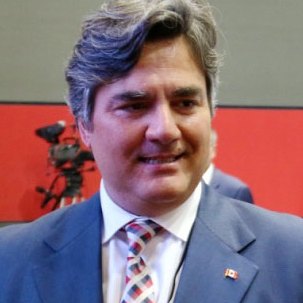
- Jonathan WilkinsonLiberalHe explicitly states he speaks in support and praises the bill's goals.

- The Assistant Deputy SpeakerLiberal
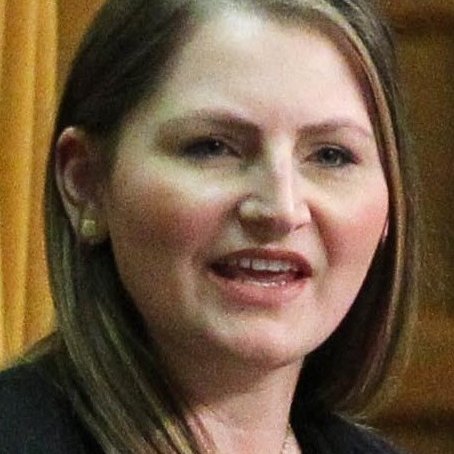
- Mike BossioLiberalHe explicitly states he speaks in support and highlights meeting commitments.
- Kim RuddLiberalSpeaker explicitly endorses the bill and highlights its benefits for investment, trust, and projects.
- Jim CarrLiberalexplicitly states pride in supporting the legislation and its goals for resource development
- Nick WhalenLiberalHe states the government has struck the right balance between environment and jobs in the legislation.
Who carries this bill
Arrows run from the person responsible to those who answer to them on this bill. The critic leads the Senate’s scrutiny and answers to no one on it.

What it set out to do
The pre-release version of this Legislative Summary is now available. Parliamentarians and their staff can obtain a copy by submitting a request or contacting the Library of Parliament. Members of the public can obtain a copy by contacting the Information Service at the Library of Parliament at [email protected]. On 8 February 2018, the Minister of Environment and Climate Change introduced Bill C-69, An Act to enact the Impact Assessment Act and the Canadian Energy Regulator Act, to amend the Navigation Protection Act and to make consequential amendments to other Acts, in the House of Commons and it was given first reading. Bill C-69 Part 1 enacts the Impact Assessment Act and repeals the Canadian Environmental Assessment Act, 2012. Among other things, the Impact Assessment Act (a) names the Impact Assessment Agency of Canada as the authority responsible for impact assessments; (b) provides for a process for assessing the environmental, health, social and economic effects of designated projects with a view to preventing certain adverse effects and fostering sustainability; (c) prohibits proponents, subject to certain conditions, from carrying out a designated project if the designate…
Summary by the Library of Parliament.
Where members stand
3rd reading and adoption of Bill C-69 · 2018-06-20 · Passed
- Voted for: 169
- Voted against: 131
- Did not vote: 37







































How it changed on the way
24% of the text as introduced was changed or removed by the time it became law (122,856 words introduced, 116,818 passed). A committee amended it.
moderate changeintent mostly kept
The bill kept its core structure and purpose but added new subsections on time limits, recommendations, and exclusions while refining navigation approval rules. Dates, session references, and certain procedural details were updated between introduction and royal assent.
- Navigation approval condition was narrowed to apply only when work may interfere with navigation.
Before: “(d) require that an owner apply for an approval for a major work in any navigable water;”
After: “(d) require that an owner apply for an approval for a major work in any navigable water if the work may interfere with navigation;”
- New exclusion for certain physical activities added to regulations section.
After: “112.1 Physical activity excluded”
How precisely it is written
vagueChallenging the law: EasyDisputing a charge: Moderate
The bill relies heavily on subjective public-interest tests and broad discretionary powers rather than fixed criteria or numerical thresholds. This leaves core decisions about project approval, panel referrals and time limits open to prolonged argument.
Open to argument
“if the designated project is likely to cause certain environmental, health, social or economic effects”
Uses the open-ended term 'likely' and an undefined list of effects instead of objective standards.“unless the Minister of the Environment or Governor in Council determines that those effects are in the public interest”
Grants unfettered discretion to decide what counts as 'public interest' with no statutory definition or weighting formula.“if he or she considers it in the public interest to do so”
Minister's referral power rests on personal opinion rather than any measurable test.“taking into account the impacts on the rights of the Indigenous peoples of Canada, all effects that may be caused by the carrying out of the project, the extent to which the project contributes to sustainability and other factors”
The catch-all 'other factors' and undefined 'sustainability' invite endless debate over scope.
Clear-cut
“Agency means the Impact Assessment Agency of Canada that is continued under section 153”
Provides a clear statutory definition tying the term to an existing body.“requires that an impact assessment be referred to a review panel if the designated project includes physical activities that are regulated under the Nuclear Safety and Control Act”
Uses an objective trigger based on listed statutes rather than discretion.
Discretion. Extensive power is delegated to the Minister, Governor in Council and Regulator to set time limits, issue instructions, make regulations, and decide public-interest questions with minimal statutory constraints.
Challenging the law itself. The repeated use of undefined 'public interest' and 'likely' standards creates vagueness and overbreadth arguments under section 7 of the Charter.
Disputing a charge under it. A proponent could readily argue that the Minister's subjective public-interest finding or 'likely effects' assessment was reached without proper evidence or consideration of required factors.
Read by a language model from the royal assent text; every quoted phrase appears in the bill. A reading of the drafting, not legal advice.
Did it work?
no evaluation found
Who lobbied on it
No lobbying registration naming this bill is loaded.
Stages and dates from LEGISinfo.