Bill C-47 · 41th Parliament · Stephen Harper
Northern Jobs and Growth Act
An Act to enact the Nunavut Planning and Project Assessment Act and the Northwest Territories Surface Rights Board Act and to make related and consequential amendments to other Acts
Government bill. Became law.
- IntroducedNov. 6, 2012
- Debated in principleNov. 26, 2012
- Studied by a committeeDone
- Passed its first chamberMarch 4, 2013
- Passed the second chamberMay 21, 2013
- Became lawJune 18, 2013
Leading supporters
Ranked by the part each played: who is responsible for the bill, who carried it, and who spoke for it most.
- Stephen HarperPrime Minister
- Rebecca PattersonSenate · Sponsor in the Senate
- Carolyn BennettStates Liberals support the bill but objects to the government's refusal to accept amendments.
- Carol HughesStates that New Democrats will support the bill even without amendments.
- Kevin LamoureuxStates the bill is worthy of support and expects it to pass with votes from all sides.
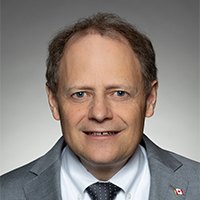
- John DuncanMoves the bill and ties it to jobs, growth and northern economic opportunities.
- Leona AglukkaqMoves third reading and promotes the bill as essential for northern development and certainty.
- Greg RickfordDescribes the bill as important legislation balancing interests for northerners.
Who carries this bill
Arrows run from the person responsible to those who answer to them on this bill. The critic leads the Senate’s scrutiny and answers to no one on it.
What it set out to do
On 6 November 2012, the Minister of Aboriginal Affairs and Northern Development introduced Bill C-47, An Act to enact the Nunavut Planning and Project Assessment Act and the Northwest Territories Surface Rights Board Act and to make related and consequential amendments to other Acts (Northern Jobs and Growth Act), in the House of Commons and it was given first reading. The Nunavut Land Claims Agreement requires that Inuit and the Government of Canada establish a joint system to oversee the way resources are managed in the Nunavut Settlement Area. The Nunavut Planning and Project Assessment Act provides that system of laws. The Yukon Surface Rights Board Act was created in 1994 to meet Canada’s obligations arising from the Yukon Umbrella Final Agreement. The Yukon Surface Rights Board is a tribunal whose primary role is to resolve access disputes between those owning or having an interest in the surface of the land and others with access rights to the land. These disputes are primarily related to accessing or using Yukon First Nation settlement land and, in certain circumstances, disputes involving access to or use of non-settlement land. Part 1 of Bill C-47 enacts the Nunavut Plann…
Summary by the Library of Parliament.
Where members stand


How it changed on the way
60% of the text as introduced was changed or removed by the time it became law (54,164 words introduced, 51,890 passed).
substantial changeintent mostly kept
The bill received royal assent with updated title, chapter, and assent date information while retaining the core structure and most definitions. A small number of interpretive provisions drawn from the land claims agreement were added at the end of the interpretation section.
- Updated bill status from first reading to royal assent with chapter number.
Before: “FIRST READING, NOVEMBER 6, 2012”
After: “ASSENTED TO 19th JUNE, 2013 BILL C-47”
How precisely it is written
vagueChallenging the law: EasyDisputing a charge: Easy
The bill supplies many defined terms and numbered sections but repeatedly uses subjective phrases that turn outcomes on opinions and likelihoods. This leaves wide room for argument over what triggers duties or prohibitions.
Open to argument
“if it considers it appropriate to do so”
The phrase makes the Commission's decision turn on its own subjective view rather than an objective test.“is likely to be carried out”
Relies on a prediction of future events without measurable criteria.“the minor variance is not appropriate, in their opinion, for any other reason that they specify”
Grants open-ended discretion based solely on the decision-maker's stated opinion.“After concluding any consultations that it considers appropriate”
Whether consultations occur and how many depend on the Commission's own assessment.
Clear-cut
“"Agreement" means the land claims agreement between the Inuit of the Nunavut Settlement Area and Her Majesty the Queen in right of Canada that was ratified, given effect and declared valid by the Nunavut Land Claims Agreement Act, which came into force on July 9, 1993”
Pins the term to a specific, dated statute and document.“This Act also applies to projects to be carried out wholly or partly outside the designated area and to impacts outside that area to the extent necessary to give effect to sections 80, 98, 113, 133, 156 to 162, 168 and 185 to 187”
Uses exact section numbers to limit geographic reach.
Discretion. Ministers, the Commission and the Board decide when consultations are sufficient, when impacts are likely, when variances are appropriate, and when public reviews are needed, with almost no numerical or factual thresholds supplied.
Challenging the law itself. Broad phrases such as 'considers appropriate' and 'likely to' invite vagueness and overbreadth arguments under section 7 of the Charter.
Disputing a charge under it. A person can readily dispute whether a project 'is likely to' produce impacts or whether a variance is 'appropriate in their opinion,' because both turn on contested subjective judgments.
Read by a language model from the royal assent text; every quoted phrase appears in the bill. A reading of the drafting, not legal advice.
Did it work?
no evaluation found
Who lobbied on it
No lobbying registration naming this bill is loaded.
Stages and dates from LEGISinfo.