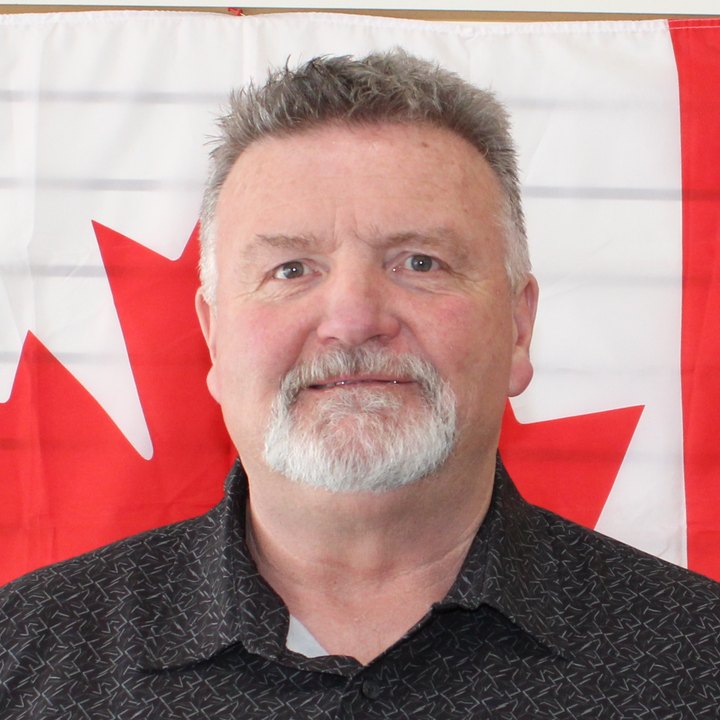
Kent MacDonald
Liberal · Cardigan, PE
Photo: Yellowjournalism, CC BY-SA 4.0, via Wikimedia Commons
Loading the riding.
Biography
Kent MacDonald is a Canadian politician from the Liberal Party of Canada. He was elected Member of Parliament for Cardigan in the 2025 Canadian federal election. encyclopedia
- Languages
- Englishofficial
- Occupation before politics
- politicianencyclopedia
Electoral history
Cardigan
Liberal · 45th ParliamentSince 2025-04-28officialKent MacDonald14,404James AylwardRunner-up · Conservative9,442Difference 4,962 votes. 4 other candidates also ran.
Elections Canada, 45th general election.
Education
Our sources do not list any education for this member.
Experience
Our sources do not list any previous employment for this member.
In their own words
287 Hansard interventions on file. These are the words said in the House, not a summary. Private conversations are not collected and are not invented.
Thank you, sir. Good morning, Minister. We know that Canada and the agriculture sector, in my mind, get overlooked sometimes. The Canadian Federation of Agriculture has a goal of increasing our GDP. It's $150 billion now, and one in nine jobs are in agriculture. It has signific…Debate · 2026-06-18
Where they stand
Policy positions are scored only from this member's stored House words and, when it is on file, their own public website. Wikipedia and other encyclopedias may supply details such as a birth date, education or work history, and each of those details is labelled with its source, but they are never used to score a position. Members whose only sources are encyclopedias have no scored positions.
A stored score on 13 of 14 topics. Each row names the end of that topic’s axis the stored words reached, and the sentence the score rests on.
Agriculture
Defend supply management
The other end of this axis: Liberalize supply management
Proud of stance keeping supply management off the table and repeats support for the dairy sector under it.
Our government has been quite clear, and the Minister of Agriculture, a colleague of mine from Prince Edward Island, has been quite clear: Supply management will not be on the bargaining table when we negotiate with our southern neighbours. I am proud of the government's stance on this. The future of farming is going to be climate-smart, tech-driven and farmer-led, and we are here to help, not hinder, the process.Source of that line
Climate
Slower phase-down, production first
The other end of this axis: Faster fossil phase-down
Supports removing the consumer carbon tax to lower costs for farmers and fishers while keeping the industrial carbon price.
Removing the consumer carbon tax will help our fishers and farmers be more competitive, with lower costs to process and transport their products, and it will benefit all other residents through reductions in fuel prices. Cutting the GST on houses at or under $1 million for first-time homebuyers will result in up to $50,000 in savings.Source of that line
Defence
Higher spending and more capability
The other end of this axis: Restrain spending and deployments
Backs budget investments of $6.6 billion to strengthen Canada's defence manufacturing base.
Budget 2025 would invest $6.6 billion over five years to strengthen Canada's defence manufacturing base through the defence industrial strategy, creating new economic opportunities in Atlantic Canada. For those who have served, Veterans Affairs Canada, located in Charlottetown, would receive $185 million over four years plus $40 million ongoing to streamline disability benefits and modernize service delivery so that veterans receive the support they deserve.Source of that line
Energy
Restrict new oil and gas
The other end of this axis: Expand production and export
Advocates incentives for clean energy generation, wind, solar and hydro to address shortages.
In my region of Atlantic Canada, we have a shortage of electricity, so incentivizing clean energy is going to help with windmill expansion. We're also going to need expansion of solar energy, and we will look to more hydro development transmission cables.Source of that line
Federalism
Near the middle of this axis
Mentions both federal leadership on programs and provinces contributing to expenditure cuts.
Unfortunately, the maritime provinces, as part of Canada, had to contribute. I was as disappointed as you that they closed that research station.Source of that line
Financial regulation
Tighter prudential rules
The other end of this axis: Lighter capital rules and more competition
Raises concerns about consumer debt stress on smaller institutions and supports capping bank fees.
I recently met with representatives of credit unions from Atlantic Canada. They had some concerns with different issues, but one they brought up was increased consumer debt stress. Is there anything that can be done to lessen the risk on the smaller financial institutions and the credit unions vis-à-vis the charter banks, which are larger structures?Source of that line
Fiscal policy
Lower taxes and tighter spending
The other end of this axis: Higher taxes and public spending
Repeatedly supports middle-class tax cuts, removal of the consumer carbon tax, and GST relief, citing $27 billion in savings over five years.
We are letting Canadians keep more of their hard-earned paycheques by delivering a middle-class tax cut and by removing the consumer carbon price. The middle-class tax cut provides relief for nearly 22 million Canadians, and over the next five years it is expected to deliver more than $27 billion in tax savings. Importantly, this relief is targeted to those who need it most, with nearly half of the benefit going to Canadians in the lowest tax bracket.Source of that line
Foreign affairs
Near the middle of this axis
Excerpts discuss temporary foreign workers but do not address alliances or sanctions.
I understand that the move from one year to two years on the LMIA is complicating and adding red tape to processors and producers that use the program. Could you paint a picture for me? Where would we be if we eliminated the temporary foreign worker program? I would assume it would be dire.Source of that line
Health
Expand public coverage
The other end of this axis: More private delivery
Strongly supports maintaining and expanding child care, pharmacare and the dental care plan.
We are maintaining key programs, such as child care, pharmacare and the new dental care plan, which now helps millions of Canadians, including thousands of people in Cardigan. We are also going to be reducing income taxes for approximately 22 million Canadians.Source of that line
Housing
Market supply and deregulation
The other end of this axis: Public supply and demand controls
Supports GST cuts on new homes, cutting municipal development charges, and fast-tracking builds through Build Canada Homes.
Cutting the GST on houses at or under $1 million for first-time homebuyers will result in up to $50,000 in savings. In rural P.Source of that line
Immigration
Lower intake
The other end of this axis: Higher permanent intake
Notes that immigration rules were changed making the LMIA program tighter with one-year renewals.
Nationally, we have changed the rules in immigration and the LMIA program is a little tighter with a one-year renewal required. When you talk to your membership, I'm sure you're getting the same comments that there's a shortage of labour, and the application for temporary foreign workers has become more complicated, more regulatory in nature and more of a persistent obstacle to small business owners.Source of that line
Labour
More flexibility for employers
The other end of this axis: Stronger unions and standards
Supports expanding student jobs programs and removing interprovincial labour mobility barriers.
The plan to remove all remaining federal barriers to internal trade and labour mobility by Canada Day is a major win for P.E.I., and I am hopeful this includes reducing the tolls on the Confederation Bridge and Atlantic Canadian ferries to make all industries in P.Source of that line
Trade
Diversify away from one partner
The other end of this axis: Deeper continental integration
Calls for new trade alliances across Canada and the world and repeated emphasis on trade diversification away from heavy US reliance.
We need to trade with all the countries we can diversify in. We don't just have to pivot from the United States and increase trade in Asia or China. We need a lot of markets for agricultural commodities.Source of that line
1 topics with no stored score
- Public safetyNo position has been scored.
Who lines up
Comparing stored scores on the same questions.